



On a rally, every day driving in the mountains begins the same way. Porsches gather at the hotel entrance, usually a courtyard or broad portico we’ve chosen for precisely this purpose. Hotels with generous forecourts tend to rise quickly on our list, for reasons that become obvious around eight in the morning. Flat-sixes fire in sequence and settle into a low, steady hum as they warm up. When everyone is ready, the group rolls out slowly, one car after another. It’s the easygoing moment before the day begins in earnest.
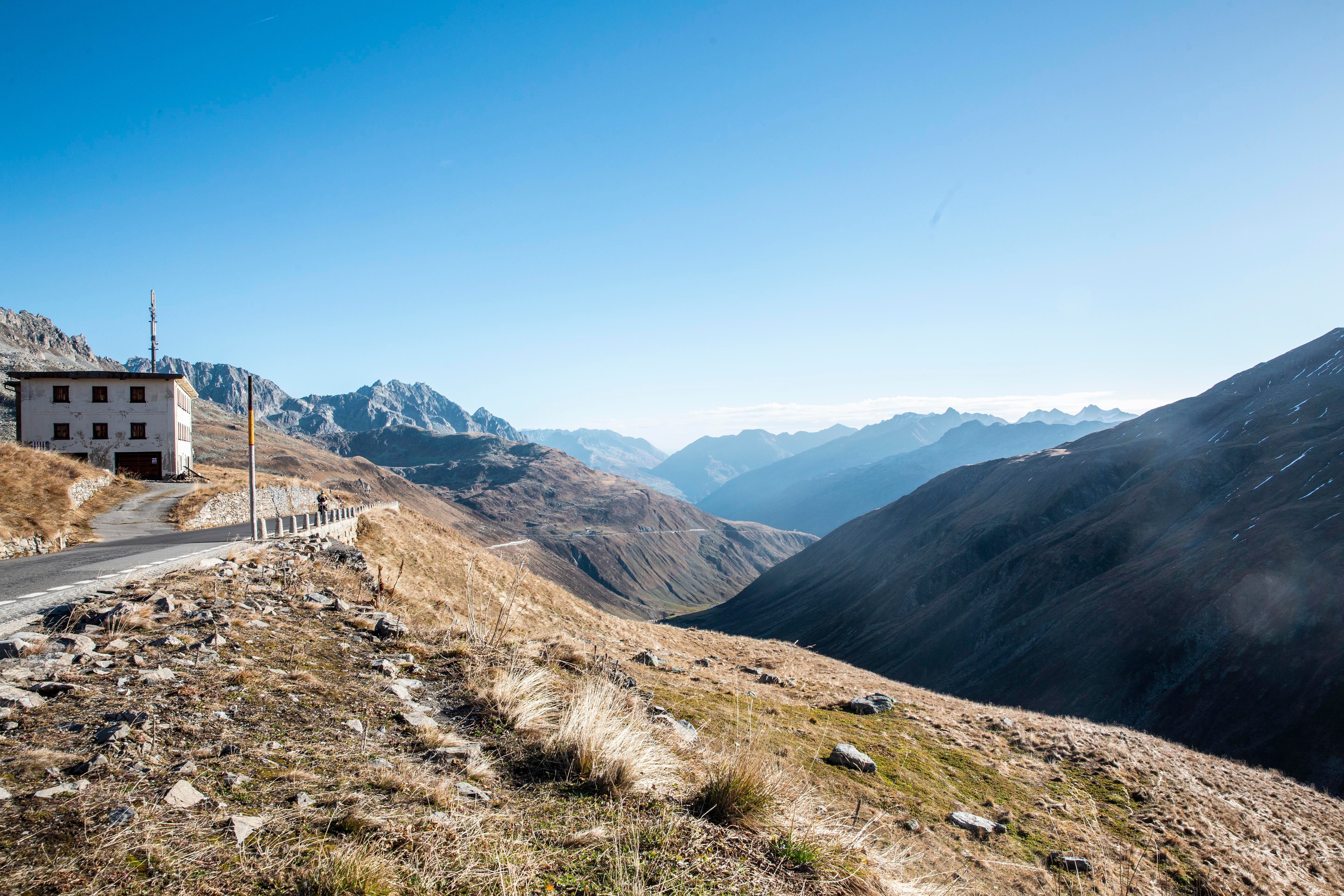
The Swiss Alps are one of those rare places on earth where the scale of the land confronts you with the full measure of life. The mountains pierce through the light while the valleys fall into darkness. At altitude, the air is fresh and thin and you feel so close to the sky you can almost touch it.
In a single hour you can move from sweltering sun to cold fog, from green pastures ringing with cowbells to stone-cold rock and ice. With its dignified air and rugged terrain, I have never felt so removed from the world and, at the same time, so near its center. Poet Percy Shelley captured this tension by opening his poem Mont Blanc: Lines Written in the Vale of Chamouni, with the words, “The everlasting universe of things, Flows through the mind…”
Geography of this magnitude gathers observers of consequence. No shortage of great writers have attempted to capture both the Alps’ beauty and their shadow. From the reverence of Samuel Coleridge and Wordsworth to Lord Byron’s darker reflections and Hemingway’s hard-edged alpine adventures, the Alps have long drawn those who felt compelled to witness their force and convey it on the page. Wordsworth wrote, “The revelation was not the mountain peak, but the mind confronting magnitude.” The vast expanse of highs and lows place us in proper scale — humbling without diminishing. And what would nature be without our consciousness of it?
Going back further, the ancients believed the mountain ranges were the work of gods. Hannibal led thirty thousand men, nine thousand cavalry, and thirty-seven elephants across treacherous passes to surprise Rome with an impossible undertaking. Centuries later, Napoleon marched his army over San Bernardino to catch the Austrians off guard in Italy. Their treks across steep snowbound terrain was not a romantic ambition; it was a strategic necessity. Both crossings stand as some of the greatest maneuvers in military history.
I like to picture these men of distinction looking upon the same alpine scenes so many years ago. Napoleon and his Marshals surveying and maneuvering the passes with 40,000 soldiers, Wordsworth and Coleridge studying the light as it breaks over the snow-capped summits. The mountains were indifferent then, as they are now. Long after we are gone, others will stand above the silvery clouds and feel the same sudden humility before the vast unyielding landscape.
The road, of course, is why we come. The Alps have some of the most extraordinary driving in the world.
